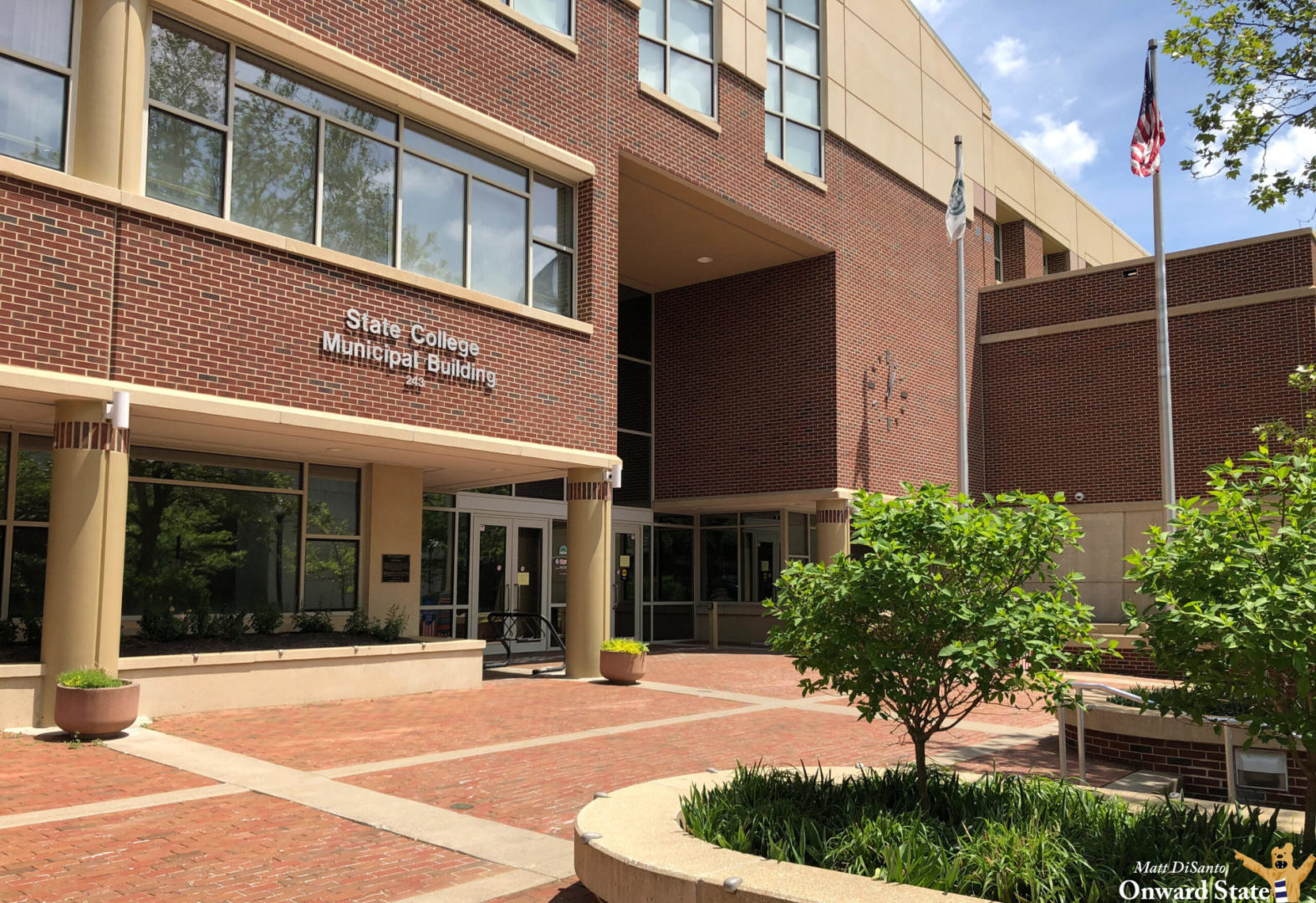
State College Council on Monday adopted a 2026 budget with a significantly lower real estate tax increase than originally proposed, though most members expressed reluctance about continuing the borough’s structural deficit for another year.
Council voted 5-2 in favor of a two-mill property tax increase as part of the $72.2 million fiscal plan. The hike will raise the borough’s municipal millage to 24.88, or $.02488 times the assessed property value.
Borough administration initially proposed an eight-mill increase that would have produced State College’s first structurally balanced budget in five years. During budget review sessions over the last month, however, council members bristled, to varying degrees, at such a steep, single-year increase.
Instead, the borough will transfer $2.8 million in unexpected real estate transfer tax revenue received this month and $1.2 million from street projects now deferred until 2027 to the general fund to reduce the tax hike down to two mills.
State College’s financial policies require a structurally balanced budget using current revenues to fund current expenditures, but that has not been the case since before the COVID-19 pandemic. Over the past few years, the borough has used reserves bolstered by some of the $13.2 million in American Rescue Plan Act money it received to cover recurring expenses.
The total budget for 2026 includes expenditures of $72,236,740 — $3.8 million less than 2025 — and $60,561,259 in projected revenues, with $11,675,481 million allocated from designated fund balances, as is typical.
The overall budget includes a general fund budget, which represents current expenses and income and which would have been balanced under the original proposal, with expenditures of $43,654,648 and revenues of $39,571,598, marking the sixth consecutive year it will be structurally unbalanced.
“We are not borrowing money to pay for our spending with this budget, but we are spending down reserves, and we cannot do that forever,” council member Matt Herndon said.
Herndon said the borough needs to complete its zoning rewrite to allow more new construction that will expand the tax base, noting that assessed property values in the borough have not kept pace with inflation over the last decade.
“We certainly cannot guarantee what happens in the future, but we need to put ourselves in the best position to limit future tax increases,” he said. “And that means passing a zoning update that allows new building here”
About 45% or property in State College is currently tax-exempt, which Borough Manager Tom Fountaine said at an earlier meeting makes for an ongoing challenge to balance a budget “with the level of service that is provided by the Borough of State College.”
John Hayes reluctantly voted in favor of the budget and agreed that the “best thing we can do” is to encourage more building that will grow the tax base.
“We are not being profligate with funds. We take a very fine-tooth comb to this budget and, frankly, we are providing the services that our community has asked of us,” Hayes said. “So now the fiscally responsible thing to do is to pay for those services that people have asked us to provide. So i’m a reluctant yes this year because I do not believe [in] kicking the can down the road to next year and hit people with a five-mill increase, which is what we’ll have to do to dig out of the hole that we’re putting ourselves in.”
Gopal Balachandran, who along with Josh Portney voted no, said the borough does need to look at reducing expenses, and reiterated his call from previous discussions that it should begin by not filling three vacant police officer positions. The department is budgeted for 60 sworn officers, but currently has 57 positions filled.
“In this situation, I think it’s particularly unwise to hire three more police officers when we are at historically low crime rates in Pennsylvania, which is cause for celebration,” Balachandran said. “This historically low crime rate may come as a surprise to many, given how much misinformation there is about crime rates. But until we get a hold on our spending, I’m still a no vote on the budget because we are simply just kicking the can down the road.”
Police Chief John Gardner warned during a Dec. 5 work session that the department already regularly schedules overtime to meet minimum staffing levels and that some services provided by police, beyond responding to crime calls, could go by the wayside.
Fountaine at previous meetings said the the budget proposal was “very much status quo” with no new employee positions and some projects pushed to future years. He added that throughout the borough cutting back on staffing would provide several challenges, including increased overtime, employee burnout or reduced service levels.
On the revenue side, Council President Evan Myers is cautiously optimistic about proposed state legislation that could expand municipal taxing power, such as expanding the local services tax or enacting a local tax on served alcohol, which he said which he said can help recover revenue from visitors who incur expenses but don’t pay real estate or income tax to the borough.
“The need to get the zoning done… the need to allow more density, more housing, that would help,” Myers said. “We also need to pressure as much as we can the legislature to allow us to garner the revenue that we can use.”
Council members pledged to begin evaluating borough revenue and expenditures in early 2026 to look for ways to balance the budget and minimize tax increases for 2027.
Nalini Krishnankutty said those conversations shouldn’t focus only on property taxes and the zoning revision, which may not have a substantial impact for years.
“So I think we need to get creative,” Krishnankutty said. “We need to look at other solutions that includes maybe judicious cuts or other avenues. And how can we generate revenue? So I’m committed to working on this. I do think the reason I’m willing to be a yes on this is we heard from all our residents… that inflation that was talked about earlier, that’s impacting people right now. And so I’m actually thankful for this one-time infusion of money and the time that we’ve got just to figure this out. I’m committed to that, to work on that in 2026 for the 2027 budget.”
BUDGET HIGHLIGHTS
Planned capital improvements, paid for across various funds and many with state grants, include the long-planned Easterly/Westerly Parkway shared-use path, Pugh Street Parking Garage and McAllister Deck repairs, phase two of a traffic signal project, fuel island upgrades and restrooms and other upgrades for Highpoint Park.
Other priorities addressed in the budget are the ongoing Calder Way improvements, completion of the comprehensive zoning revision, ongoing support for affordable housing, funds to assist the State College Redevelopment Authority’s work to support economic and business development, the completion of the Downtown Plan in preparation for the Downtown State College Improvement District renewal and preparing for the implementation of the Next Generation Mobility Plan and the replacement of the Pugh Street garage.
The major cost drivers are employee wage increases, a 9.1% increase in group health insurance and inflation, Fountaine said in introducing the budget in November.
The budget also includes $3,005,611 for the borough’s share of regional programs to support the Centre Region Council of Governments and Centre Area Transportation Authority budgets, an increase of $565,936 from 2025.
The borough anticipates a decrease in realty transfer tax revenues, flat local services tax revenue and a $200,410, or 3% increase, in earned income tax revenue (though the earned income tax rate will remain unchanged).